

It’s French for “Opposite Day” because it might as well have been. Wait – does that mean we actually won?
The Mammoth, riding a strong two game win streak, took on the Montreal Canadiens today, in a rematch from a bad loss earlier in the month. The teams are seeming to trend in different directions the past few days, which could play out well for the Mammoth. Utah additionally had a big addition to the lineup, as my prediction of Sean Durzi coming back to the line-up was correct. Call me Hockeydamus?
The Canadiens are a high scoring team that gives up a number of goals, and goaltender Jakub Dobes was starting tonight against the Mammoth. Sporting just under an .845 save percentage over his last 5 games – and giving up 18 goals in that span – Utah would have a golden opportunity to hit that magic 3 goal threshold. Durzi is helpful for an offense that needs a spark, and Logan Cooley just opened the floodgates against Vegas.
This was going to be a game that you’d bet the over on goals confidently – so would Utah’s offense be enough against a high-octane Canadiens offense?
FIRST PERIOD:
Utah and Montreal started out surprisingly slow for two skilled, fast teams. Early on, both teams’ defenses were making plays at the line or blocking attempts to keep things shotless. The best of the early chances came when Sean Durzi was able to take a shot from Ivan Demidov in the shins deep in the slot, shaking doubts that he was ready to be back.
Josh Anderson got the first official shot on goal, with a rush chance up the wing. He skated from the boards to the slot, out skating Nick DeSimone and going cross-body shot on Karel Vejmelka. Vejmelka, starting his 4th game in a row, snagged the puck to keep the game scoreless. He was tested again about a minute and a half later, but his blocker bailed Utah out.
Kevin Stenlund led a semi-breakaway, but Utah’s first shot of the game hit Dobes in the logo. A few minutes later, Barrett Hayton tried to center a feed right in front of the net, but it was kicked out by a skate. Schmaltz threw a puck hoping for a tip or redirect, but the effort went wide.
At the 8 minute mark, Montreal’s deadly sharpshooters were granted the first power play of the game. Montreal, for all of their firepower, have been cold on the power play. They’re 1 for their past 23. Does this sound familiar to you? Facing them, Utah’s penalty kill. Utah’s PK has been perfect in November in 5 on 4 situations. Obvious advantage to Utah right?
Lane Hutson, Montreal’s phenom defender, ripped a shot from the blue like that Vejmelka snagged beautifully. The next drive into the zone, Hutson went in with Cole Caufield, right next to each other, on basically a 2 – 0 against Vejmelka. Ian Cole flanked Hutson to his left, so he was forced to make a tight pass to Caufield, who had his shot saved by a sprawling Vejmelka to preserve the scoreless tie.
Now, here’s my first absolute bone to pick with one Jordan Samuels-Thomas (JST for short). JST called a penalty with Ivan Demidov rushing the net 4 on 1. He got John Marino for hooking. While a call 95% of the time is not made when a team is already down on a PK, JST decided to call it. However, Demidov’s hook had him fall on the ice. A slight stick to the hands, and he fell.
Know what that’s called when it happens to Utah? Embellishment. Twice in a week Utah’s been called for embellishment. This, more egregious than the hit Logan Cooley took against Vegas, resulted in Cooley sitting. Demidov? Nope, angel he is, he’s given his team a 5 v 3 PP.
Utah had 53 seconds of 5 v 3 to kill, and did so magnificently. Utah blocked passes, lanes, and shots for the entire 1 man advantage. Utah was well on its way to another great PK, right?
Not on opposite day.
Let’s be bluntly honest. This power play was a joke and should not have been one. Absolute joke of a call by a clown referee who really hates this city. I digress… for now.
Zack Bolduc took a cross-ice pass from Lane Hutson at the top of the dot for a one-timer. Nate Schmidt had given Bolduc too much space, and Bolduc beat Vejmelka short side for the ice breaker. 1-0 Refs Montreal
Utah had a solid bounce-back shift, with several won board battles deep in the Montreal zone, but shot selection wasn’t good at all. One attempt, way off the glass. Sergachev with some nifty skating, but no one to tip in front. Stuff attempt in front, but no dice. A redirect right in front. Dobes was able to stop all the ones that were on net, and the rest of the great opportunities were wide or high.
The teams skated and probed a little bit more, but neither team had a flurry of chances, until Jack McBain got upended in the Montreal zone. Peterka was unable to corral a puck, and with McBain down and Peterka facing the wrong way, Montreal got a 3 on 2 against the Mammoth. They’re an amazing team on the fast break – and a cross ice pass from Cole Caufield to Nick Suzuki saw the Canadiens captain bury his one timer. 2-0 Montreal
The Mammoth had a bit of a push, and after a face-off, Clayton Keller drew a tripping penalty to put Utah up a man for the first time in the game. 2 minutes short, one opportunity from a Guenther one-timer missed the net high, a second shot blocked. That’s all. That’s it. Not even a shot on net. Penalty expired, 40 seconds left in the period passed, and the horn sent them to the lockers.
Utah has one of the best goal differentials in the league in first period. They routinely outperform, out shoot, and outscore opponents in the first period.
Not on opposite day.
Shots 7 – 6 in favor of Montreal.
SECOND PERIOD:
Second periods are awful for Utah this year. Obviously, we need to be worried about a blowout in the 2nd period when so badly outplayed in the first.
Not on opposite day.
Utah put up one of their best 2nd periods of the year, but I’m getting ahead of myself.
The period started out similarly to the first – a little bit of fanciness from Montreal in the Utah zone, when Hutson missed a shot, but a 2 on 1 break for Utah fell apart when Nate Schmidt couldn’t connect with Kailer Yamamoto with a pass for the finisher. The Canadiens had a great opportunity in the slot, but Caufield’s shot was saved by Vejmelka, then another by Hutson at the 5 minute mark.
The Mammoth nearly broke the ice after winning the faceoff. Hayton snapped a shot high that Dobes caught a sliver of. Not to be outdone, Vejmelka absolutely robbed Caufield in front on a back-door attempt.
Carcone had a redirect attempt go wide about 8 minutes in – and Utah still had not registered a single shot at this point despite being down 2 goals.
Utah had their second power play opportunity when Alexandre Carrier threw a puck over the glass for a delay of game. Utah’s power play has been awful, so we’re guaranteed to not even get a shot on net.
Not on opposite day.
Hayton had a great individual effort on the play, as a pass by Sergachev was blocked. Hitting the boards to ensure the Montreal defense couldn’t clear the puck, his push to Sergachev hit Keller at the goal line below the dots, which was touch passed back to Hayton. Haytes hit that sweet spot between the glove and pad, giving Utah their first 5v4 PPG this month. First shot of the period, too. 2-1 Montreal
The Mammoth didn’t stop. Nick Schmaltz’s redirect just trickled wide, after an amazing feed by Durzi. Cooley big blast from the slot was stopped by Dobes’ pads, and Vejmelka had to face down a Nick Suzuki breakaway – which he did perfectly.
Yamamoto and Cooley just missed on another in-crease attempt, when the redirect by Yams was just overskated by Cooley. Yams wanted it bad, though, as the next entry saw a tired Cooley win a board battle to Guenther at the near goal line. Guenther found a streaking Yamamoto right outside of the crease, and he roofed it over Dobes. 2 minutes, 2 goals. This game was all tied up. 2-2 Tied
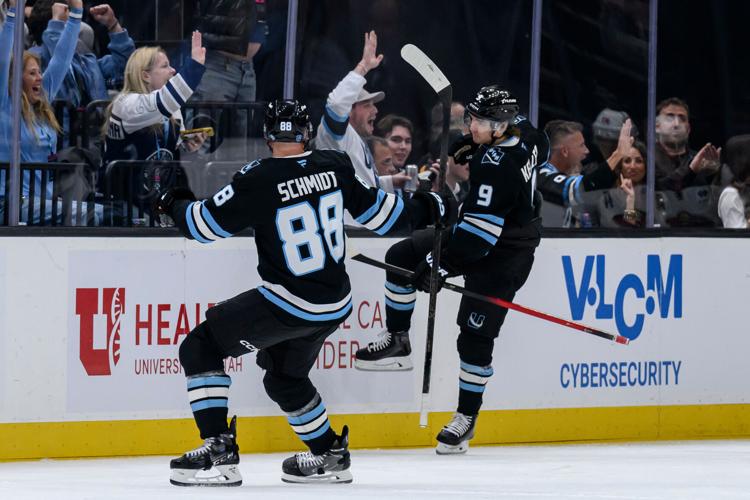
2 minutes seemed to be the magic number, because almost exactly 2 minutes later, Utah would again score. Carcone, all over the offensive zone, had the puck behind the net. Weaving back and forth to throw defenders and Dobes, he tried a wraparound. Dobes got the initial save, but Carcone stuck with it, and flipped it over the pad. Three goals in a 4 minute span erases the deficit and puts Utah up for the first time tonight. A massive scrum occurred during Carcone’s celebration, though, as Jared Davidson got the double minor while Brandon Tanev just took a roughing. Utah ends up with the lead, the man advantage, and all the momentum. 3-2 Utah
The Mammoth power play, though looked nearly identical to the first one. Guenther had a shot over the bar, but at lease Sergachev got a shot on net. Hayton, though, had some fantastic work to keep pressure in the offensive zone – good fight and hustle from the kid, especially when we haven’t seen much from him on this lately.
Uneventful play marked the next few minutes, but Utah had a chance to double the lead when they had a 3 on 1 develop off a giveaway on a Canadiens back-pass. Schmaltz had Keller in front, Hayton to his wing, and he took too long to decide – and a slashing backcheck caused a turnover without a shot. The puck was loose, but our favorite referee blew the whistle early killing any momentum from that play.
One shot apiece, nothing critical, and the period ended. Utah won a second period! Utah won a second period by +3 goals. What in the world?
Utah with 13 shots in the period, Montreal with only 5. Shots after the second period – Utah 19 – 12.
THIRD PERIOD:
Utah is great in the third period, and holds leads very well this year. They outscore their opponents by a +6 differential. This game was all locked up.
Not on opposite day.
The period started out well enough. Jack McBain almost netted his first goal in 22 games with a tip that Dobes just barely caught. Then, the massive turning point of the game happened. Not because of Montreal, or because of Utah. Because, yet again, refereeing got in the way of the game.
Objective penalties are cut and dry. Puck over glass? Penalty – no judgement needed. High stick? Same. Subjective penalties, like holding, hooking, etc. are ones that are referee discretion. Most of these are fairly clear, but some of them are not super obvious. “Make up” calls happen usually when either a call is blown or they feel that there’s an impartiality they need to make up for a previous penalty (“I called a hold when it wasn’t, I’ll even it up next time”).
Objective penalties, like delay of game, should never require a make-up call. Equally, when a team starts a fight and gets a double minor, a make-up call shouldn’t exist because that team started a fight/scrum.
Kailer Yamamoto was called for holding. This call is one, behind the play, that did not affect the scoring chance. This call is not made about 80% of the time. However, it was called here. Because reasons.
Utah back on the PK. They gave one up today, but Utah’s PK is great so they’ll be fine.
Not on opposite day.
Utah got scored on early in the power play, as Juraj Slafkovsky’s back door slapper got called back for offside. This was a tough call, and would have probably gone the other way if our friend JST had his way. Finally, a good call and break to go our way!
Nate Schmidt was held, hooked, interfered with, and tripped on a puck that got by Montreal’s defender at the boards. You know which of those four calls our friend JST called? None of them. The play continued, and Utah’s PK broke down for the second time tonight. Absolute terrible luck for Utah here. Canadiens rush immediately after the goal sees Vejmelka make a great pad save on Brendan Gallagher. Kicked rebound snap shot by Zack Bolduc hits the pipe. Puck rebounds to the stick of Nick Suzuki. How in the world can Vejmelka get so unlucky so many games with so many bad bounces? How much puck watching could the defense do here? 3-3 Tied
A minute later, Demidov on a rush rips a shot from a turnover right through the legs of John Marino. Nothing to say here other than that. 4-3 Montreal
From here, Montreal mostly turtled, with 4 shots the rest of the game (not counting an inch-away empty netter against).
For their part, Utah put up 14 shots after this second goal to Montreal’s 1. Utah pushed over, and over, and over. Dobes, a lower-than-average goalie, made save after save. 8 minutes in, a delayed call saw Utah play 30 seconds of 6 on 5 in advance of a 5 on 4 power play. Needless to say, Utah did not score on the delayed man advantage, but came tantalizing close on a post.
Guenther got a shot on goal in the first 30 seconds of the power play. That’s all. That was all the team generated while being down a goal. Just absolutely nothing.
Carcone had a great shot unimpeded from just inside the blue line a few seconds after the penalty, but Dobes made the save. DeSimone had a great look to get a back door tap in to Hayton, but his pass didn’t connect and went wide. 6 minutes to go, Schmaltz has a good look, no dice.
Veggie pulled for the extra attacker, and a Schmaltz shot with about 2:30 to go – Keller had a chance at the rebound in the paint but missed. Gunner one-timer missed, Schmaltz with a minute left in the slot was stopped right in front, and Keller had a shot low on the pads (which was a smart play) and Utah survived a post hit with the empty net. 30 seconds to go, Utah had to win the puck at center ice, but that killed about half the time left in the game. A Keller centering feed didn’t connect and Utah goes to Thanksgiving dinner with an L.
3 GOALS (THE GOOD):
 Michael Carcone has gotten a lot of flack from the fan base because they somehow expect him to score on every shift. Historically, he averages a point every 3 games. Want to know what he’s averaging this year? A point every three games.
Carcone brings a motor that doesn’t stop, he’s got physicality, and he doesn’t show fear in crashing the net and dirty areas. He’s got an absolute steal of a contract, and is able to play from lines 2 – 4. To be fair, he’s being overmatched if he’s on line 2, but as a line 3 & 4 forward, he’s absolutely solid. He’s effective at scoring in his usage right now – but it doesn’t seem like it, does it?
Did you know that Clayton Keller plays 40% more ice time than Carcone, but Carcone has 50% of the goals that Keller has? I have a feeling this is going to pop up shortly. Sean Durzi welcome back, Durz. One of the more offensively talented defenseman that Utah has, Durzi was everywhere defensively tonight. From the first minute disrupting Demidov, his play was on point. He’s still adjusting to some of the speed of the game – for example, he had a chance to make a play in the offensive zone when Utah was down one early, and had the puck stolen from him – but that’s going to come back with some at-speed playing time.
Good to see him back. This should help Utah’s PP unit and offense from the blue line. Playoff spot Hey, did you know Utah’s in a playoff spot on Thanksgiving? Historically, 70ish percent of playoff position teams on turkey day make the dance. Utah’s here somehow, even after such a massive backslide in November. Shows how great October was.
Is this good luck, or is this an opposite day mirage?
3 CHIRPS (THE BAD):
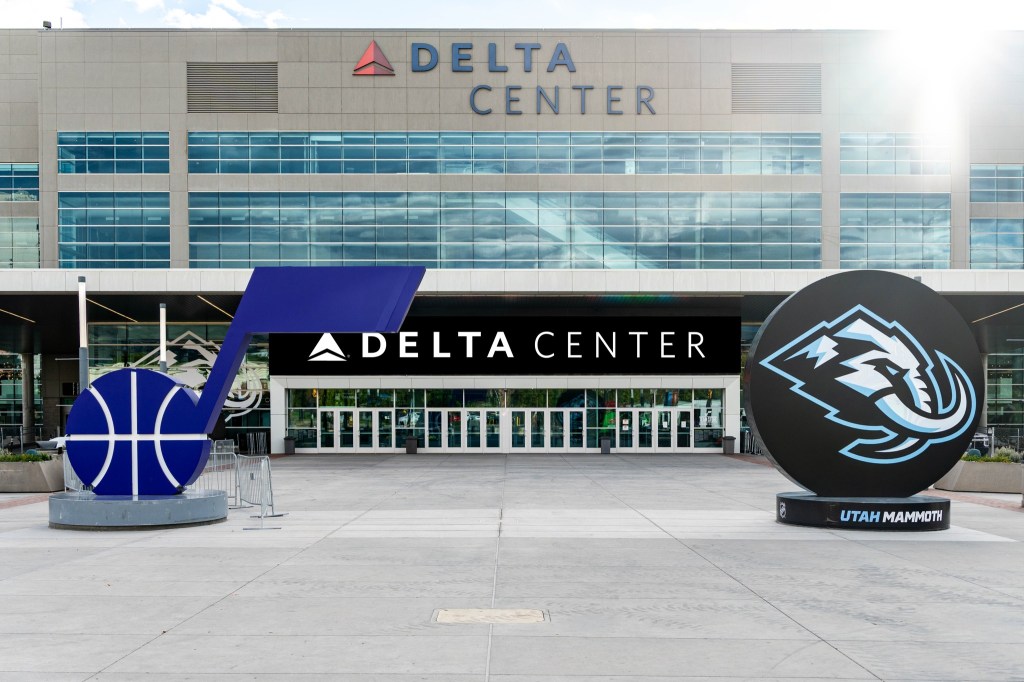
 Delta Center Plexiglass takes far too much abuse. Mammoth shooters somehow feel the net is higher than it is. Guys, it’s not soccer. Figure it out.
All November they’ve been shooting over the net. Guenther, specifically, and the defense from the blue line keep hitting the glass over the net. If you’re shooting from the blue line, you have three choices. Shoot to score if you have a lane. Shoot lower at the pads to create a rebound. Shoot near-side to create a rebound. Know the two bad areas to aim for if you miss? High and wide. High gives you no real rebound chances. Wide? Clearing the puck for the defense. Guess which Utah does?
Shooting over the net gives the goalie a free save. He had to do absolutely nothing and your scoring chance failed. Shooting over the net means your shot was too high for a tip (if we even could tip) and the puck would be a high-stick if it was contacted. That’s not ideal.
Then, they’re passing up shots that could generate rebounds. Threading a pass through three defenders is not preferable to shooting low on the goalie. Aim low for pad to force a rebound. Give your team a chance for rebounds, and stop trying to prove that safety glass can take a pounding 50 times a game. Jordan Samuels-Thomas has something out against the Mammoth. He simply doesn’t like Utah. We’ve seen him three times, and each of those times he’s done something blatant to try and screw the Mammoth. Tonight? Not just one call.
Calls he made or didn’t make:
– Trip in McBain in the first was a clear trip. Good call.
– John Marino hook on the PK? Weak call, almost never made when shorthanded.
– Ivan Demidov non-embellishment call? Absolute trash.
People said that Cooley’s “dive” was because he’s a kid that didn’t earn the benefit of the doubt. Demidov, though, is a veteran somehow who was deserving of it.
– Schmaltz slashed on a 3 on 1? No call right in front of him. Probably the right call, but I hate this dude so I’ll blame him.
– That 3 on 1? The puck was loose, but he blew the whistle quickly claiming it was covered. It was not even close to covered.
– Yamamoto got called for holding behind a play. This call is rarely made – holds that occur in the offensive zone like that are called when they affect play.
– Stenlund hold/hook/interference no call? Listen, three different penalties applied there. Know how many were called? None.
Which had outcome on the game? Marino’s bad call and Demidov’s non-call. Yamamoto’s call, and Stenlund’s non-call. 4 calls/no calls that directly impacted play, not to mention what may have happened with the loose puck when Dobes was down.
Another game he tried to screw up for us this year? Opening night, Calgary Flames. Called Keller for hooking while Utah was on the PP. It was a make up call, but such a soft, weak call that they wouldn’t call that in pee-wee.
Another? Buffalo Sabres – Nov. 12, a roughing call against Stenlund as a “make up” after a good call by the other ref earlier. No penalty the other way, though, apparently a scuffle only is one person.
Want to know how bad a referee is? Google their name. If you see any results from a fan base, it’s usually a bad thing. The Sabres Reddit, for example – brutal, and another thread earlier this year wasn’t a ringing endorsement either. The other bad sign? Well, if you remember them, and if you remember their name? That’s the ultimate problem referee. See: Angel Hernandez in the MLB.
I dread reading/hearing his name knowing we’ll have a bunch of home games later this year. Can we petition the NHL to ship him out east or something? Like to the KHL? The Utah Mammoth Power Play finally scored today. Barrett Hayton, from inside the slot, got it done. You know who isn’t getting it done though? Clayton Keller and the PP2 unit.
Maybe I’m oversimplifying, but the ideal power play units always have firepower at the top. Look at Montreal tonight, or Dallas and Colorado as blueprints. But, here, these lines aren’t working. In my mind, you either overload PP1 and score there, or you balance out the two lines with equal scoring types.
So, for example – PP2 is a disaster. You have 3 slow forwards with JJ Peterka. JJP is on an island. A fast, skilled player with a good shot needs a playmaker on his line to succeed. Who’s a playmaker that can keep up with his speed ? Why, Logan Cooley. Cooley is both a center AND a playmaker. He also can crash the net and has a good shot. Those seem complementary. Who else may be fast with a good shot that can use a playmaker? Dylan Guenther perhaps.
So you have a fast playmaker, a pair of fast shooters. What works with that? Well, if you’re stationary in the zone, you want someone to stand in front of the net. Who’s a good physical presence that can get dirty? Why, my friend Michael Carcone as mentioned above.
Did you know Carcone was the leading scorer in the AHL a few years ago? With his usage, you wouldn’t know it. He scored 21 goals in the 23-24 season with Arizona. He did worse last year, but 21 goals would have been 5th on the team last year. And he has 4 goals this year, which puts him just about 16 on the current trend.
Did you know that Kevin Stenlund plays on the PP2 instead of Carcone? Stenlund capped his career best year with 14 goals. He has 1 this year. He is on pace for 4.
So, 1 dirty-area player in Carcone, 2 scoring wingers in Guenther and Peterka, a playmaking center. What else would work? Why, a defenseman with the ability to score OR assist. Good thing we have two of those. Wait, two?
Did you know, Durzi had 15 PP assists with the Kings in 2022 and 13 with the Coyotes in 2023? From 21-23, Durzi had 5 goals, 29 assists on the power play. To compare, Sergachev had 24 PP assists in 2022. He was hurt in 23, so in 2024 he had 20 assists. Sergachev had 6 goals, 40 assists in a similar 2 year window. They seem awfully close, right?
PP2 unit – well you’ll want a playmaker to start. Hey, Clayton Keller’s got a ton of assists this year. Sounds like he could do some playmaking. How about a shooter or two? Who’s that in 2nd place for goals? A little guy named Nick Schmaltz? Well ok. How about someone that can crash the net a bit? Well, Barrett Hayton had a lot more tips and close in goals last year. Seems like he can do that. And then we need a 4th winger spot.
Did you know, Kevin Stenlund is utilized on PP2 every game this month. Stenlund has 1 goal for the year. He’s a great puck possession centerman, which is great for PKing. He’s just not providing spark or opportunity for the team on PP2.
Know what an idea PP split looks like for me?
Peterka – Cooley – Guenther – Carcone
Keller – Hayton – Schmaltz – Yamamoto/Crouse
You know what’s not an ideal PP split? Everything we’ve done for 30 days…
Next up:
Thanksgiving. Go eat some good food, be thankful we have professional hockey in Salt Lake, and then get ready to watch the Mammoth on the road while shopping for Christmas.


 Salty Stampede
Leave a comment